
Hoi An Ancient Town – A Timeless Sanctuary by the Poetic Hoai River
If there is a place on this S-shaped land where time seems to have paused its relentless march, where every weathered yin-yang tile and ancient wooden beam still breathes the spirit of bygone centuries, it is undeniably Hoi An Ancient Town. Nestled gracefully along the lower reaches of the poetic Thu Bon River in Quang Nam Province, Hoi An is far more than just a destination on the global tourism map. It is a living chronicle written in architecture, a vibrant museum preserving the memories of human cultural convergence, where literary beauty and historical depth blend seamlessly into one.
Strolling through its narrow, cobblestone alleyways, you can almost hear the echoes of a golden past when this town was one of the most bustling international trading ports in Southeast Asia during the 17th and 18th centuries. Allow Safe Car to take you on a journey through time, exploring the historical depth, extraordinary architectural artistry, and immortal cultural soul of the ancient port city of Faifo through our comprehensive guide.
KEY HIGHLIGHTS OF HOI AN
- Japanese Covered Bridge – A 400-year-old symbol of cultural fusion
- Magical pedestrian-only streets illuminated by thousands of colorful lanterns
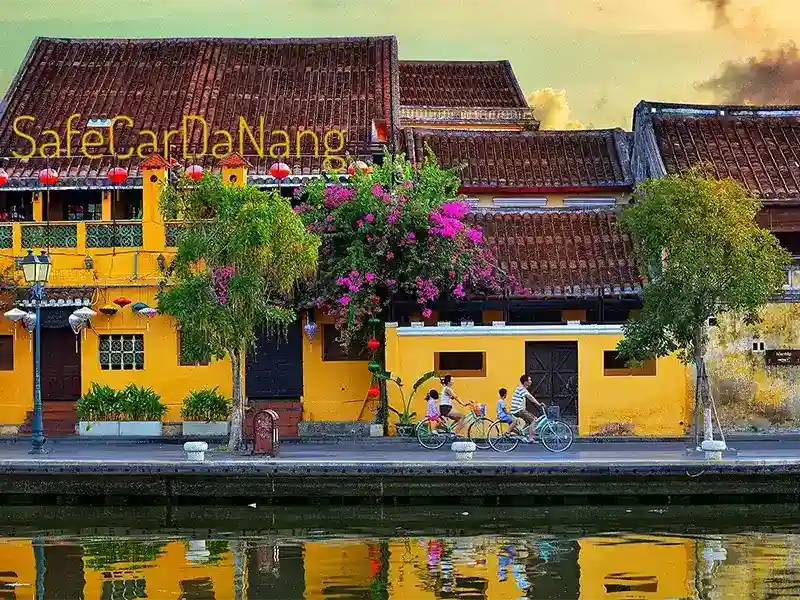
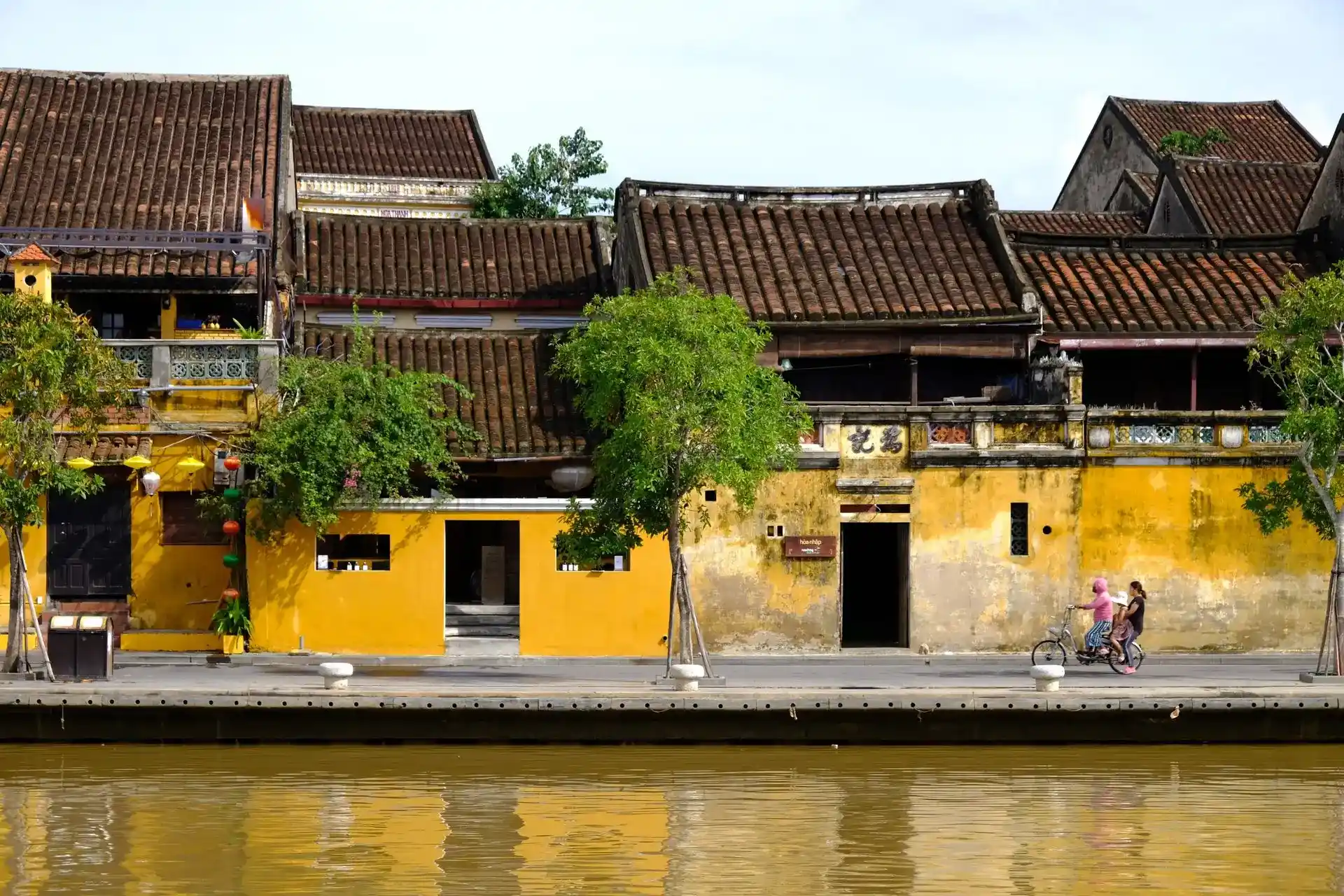
- Well-preserved traditional tube houses with iconic mossy tiled roofs
- Intangible heritage: Bai Choi folk singing and floating river lanterns
- Unique Faifo culinary fusion: Cao Lau, Mi Quang, and world-class Banh Mi
- Nearby artisan villages: Thanh Ha Pottery, Tra Que Herbs, Kim Bong Carpentry
1. HISTORICAL TRACES: FROM CHAMPA PORT TO THE GLOBAL TRADING CAPITAL OF FAIFO
Ancient Roots: The Sa Huynh Culture and Champa Kingdom
Long before evolving into the thriving trading port known as Faifo or Hoi An, this land at the mouth of the Thu Bon River possessed an astonishingly rich history. Archeologists have unearthed jar burials, pristine tools, and intricate glass and agate jewelry here belonging to the Sa Huynh culture, dating back over 2,000 years. This proves that even in prehistoric times, the early settlers maintained maritime trade connections across regional seas.
By the early centuries AD, with the rise of the Champa Kingdom, Hoi An was strategically chosen as the maritime gateway serving the sacred sanctuary of My Son and the royal capital of Tra Kieu, historically recorded as Lam Ap Pho (The Port of Champa). During this era, merchant ships from India, Persia, and Arabia docked here to trade exotic goods, bringing profound influences in religion, architecture, and Hindu sculptural arts to Central Vietnam.
The Golden Era: The 17th – 18th Centuries and the Open-Door Policy of the Nguyen Lords
Hoi An’s history turned a brilliant new page at the end of the 16th century when the Nguyen Lords established control over the Southern Realm (Dang Trong). With an advanced economic vision, the Nguyen Lords implemented an exceptionally open foreign trade policy, welcoming overseas merchants to trade freely. The Thu Bon River was deep and wide at the time, and the Dai Chiem estuary opened broad gates, creating ideal conditions for massive ocean-going vessels to drop anchor.
By the early 17th century, Hoi An had transformed into a world-class cosmopolitan port city. It became a melting pot for merchants from Japan, China, Portugal, the Netherlands, England, and France. Many did not just trade and leave; they sought permission to settle permanently, establishing dedicated quarters such as the Japanese Quarter and the Chinese Quarter. The arrival of Minh Huong merchants (Chinese immigrants) injected vibrant energy into the social and cultural landscape of the port, leaving behind magnificent assembly halls that remain majestic to this day.
The Decline and the Miraculous Preservation of Time
By the 19th century, geological shifts caused the Dai Chiem estuary to silt up with alluvial deposits, while the Thu Bon River altered its flow, rendering the harbor inaccessible to large modern ships. Concurrently, the Nguyen Dynasty adopted an isolationist policy, while the French focused on building a modern deep-water port in neighboring Da Nang. Hoi An gradually lost its crown as a premier trading hub, retreating into the quiet solitude of a small riverside town.
Yet, this historical "neglect" turned out to be a miraculous blessing. Hoi An was completely bypassed by the rapid, destructive modernization of the late 20th century and miraculously escaped devastation during two major wars. The ancient town slept soundly for over a century, so that when it awakened to the world in 1999 as a UNESCO World Heritage Site, its 17th-century harbor layout remained flawlessly intact.
2. AN ARCHITECTURAL SYMPHONY: HARMONIZING WOOD, STONE, AND MOSS
Hoi An's architecture stands as the most vivid testament to cultural synthesis. Walking along major streets like Tran Phu, Nguyen Thai Hoc, and Bach Dang, you will find yourself surrounded by an ancient architectural ensemble that beautifully harmonizes indigenous Vietnamese layouts, feudal Chinese motifs, and the refined minimalism of Japanese design.
Traditional Tube Houses – The Art of Natural Ventilation and Feng Shui
The most iconic residential style in the old quarter is the "tube house," characterized by a narrow storefront (4m - 8m) but an immense depth (20m - 60m) that stretches entirely from one street through to the next. The house is divided into multiple wooden sections separated by an open-air central courtyard known as the "skylight" (Gieng Troi or Thien Tinh).
This design represents a pinnacle of tropical architecture. The central courtyard acts as the house's lungs, drawing in natural sunlight and circulating refreshing breezes while offering a serene space for the owner to cultivate bonsai and raise koi fish to balance Yin and Yang. The entire structural frame is crafted from premium hardwoods like jackfruit and ironwood, joined entirely by traditional wooden dowels and mortise-and-tenon joints without a single iron nail. The roofs are draped in yin-yang tiles—a porous, traditional clay tile that keeps the interior warm in winter and cool in summer, beautifully carpeted with green moss over centuries.
The Mystic "Mat Cua" (Eyes of the Door): If you look closely above the main entrance of Hoi An's historic houses, you will notice a pair of round wooden carvings depicting yin-yang spirals, bagua symbols, or elegant chrysanthemums. Known as "Mat Cua," this unique spiritual feature is exclusive to Hoi An. Locals believe these door eyes endow the house with a living soul, watching over the household to ward off evil spirits and welcome prosperity.
Iconic Architectural Landmarks You Cannot Miss
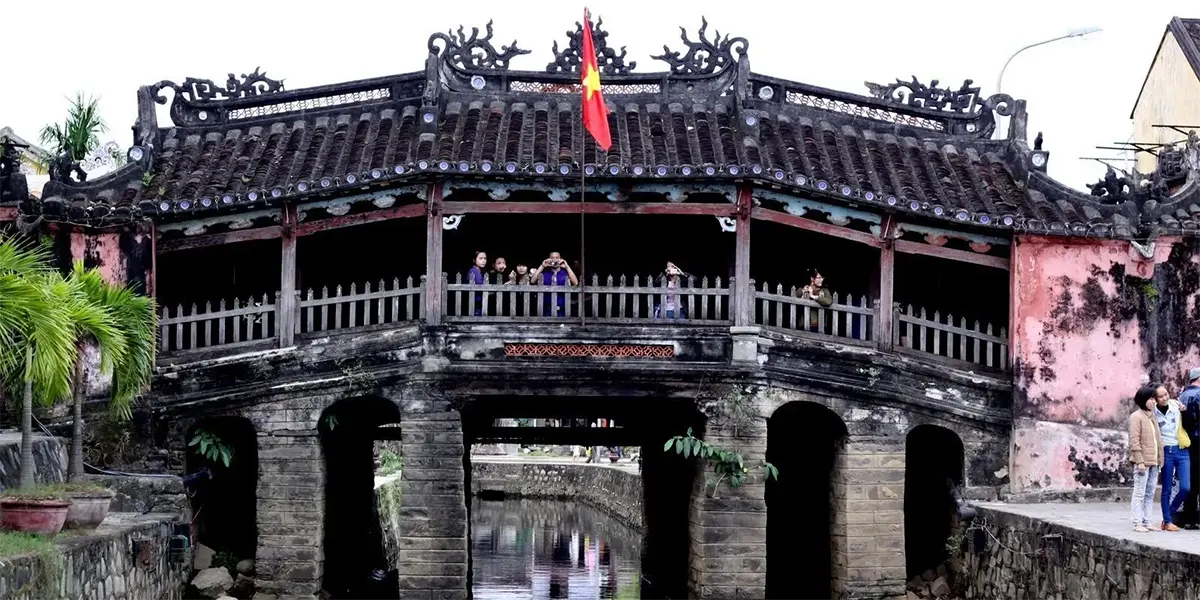
- The Japanese Covered Bridge (Chua Cau): The crown jewel of Hoi An, built by Japanese merchants in the early 17th century. Spanning about 18 meters across a small canal leading to the Hoai River, the bridge features a graceful wooden structure sheltered by a yin-yang tiled roof. At its side sits a small shrine dedicated to Northern Emperor Tran Vu, the deity of water and weather, believed to protect the town from floods. Though restored over the centuries by Vietnamese and Chinese artisans, it retains its unique Japanese silhouette.
- Phuc Kien (Fujian) Assembly Hall: Erected in 1697, this is the grandest and most opulent assembly hall in Hoi An. It features a magnificent multi-tiered gateway adorned with vibrant porcelain mosaics and a grand sanctuary dedicated to Thien Hau Holy Mother, the goddess who protects sailors and merchants on the high seas.
- Tan Ky Old House: A 200-year-old masterpiece that has been home to seven generations of the prominent Le family. Tan Ky was honored as the very first National Heritage house in Hoi An and has welcomed numerous world leaders. Every single hand-carved detail, mother-of-pearl inlay, and poetry panel here is an invaluable work of art.
3. THE SOUL OF HOI AN: LANTERN-LIT NIGHTS AND LIVING TRADITIONS
While the architecture forms the physical body, the living traditions and warm nature of the local people constitute the true soul that gives Hoi An its endless charisma. Generation after generation, Hoi An residents have preserved their gentle, welcoming character and a wonderfully slow, peaceful pace of life.
The Lantern Festival and the Ethereal Glow on the Hoai River
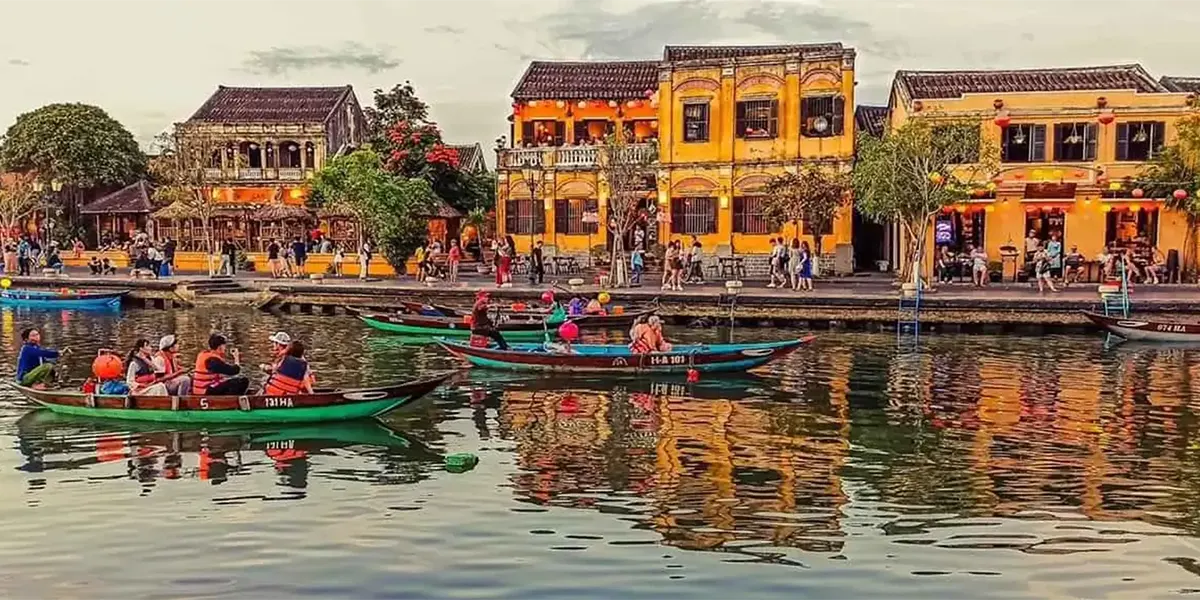
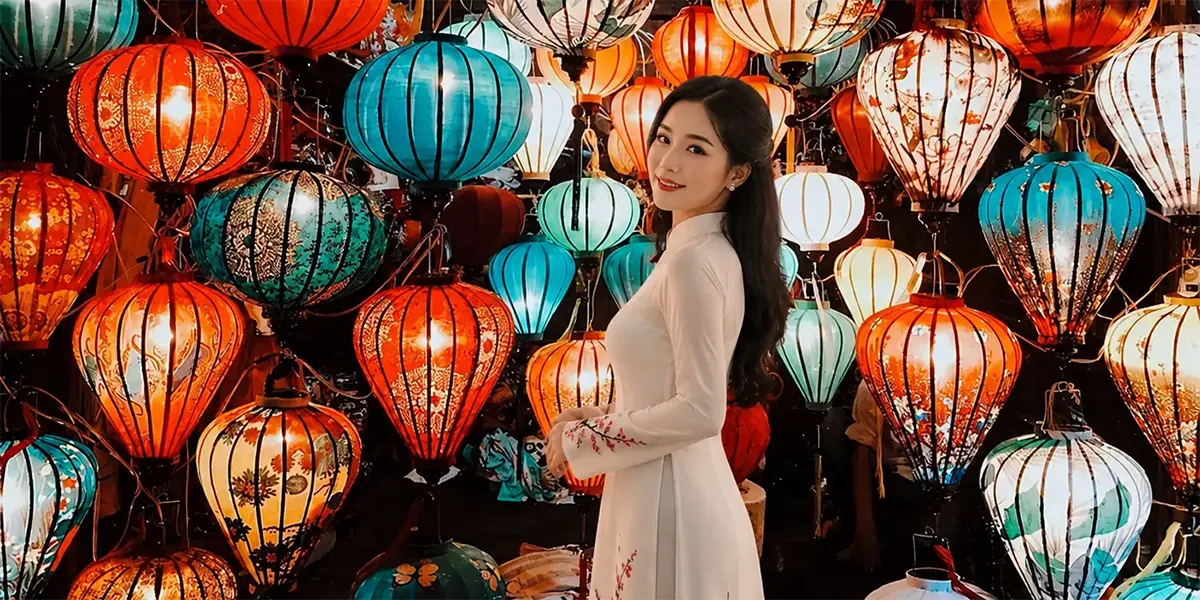
Hoi An reveals its most breathtaking beauty after sundown, especially during the monthly Lantern Festival held on the 14th day of the lunar calendar. On this magical night, the entire ancient quarter turns off its modern electric lights, leaving the streets illuminated solely by the warm, flickering glow of thousands of traditional silk lanterns hanging from verandas, lining the alleys, and reflecting off the calm waters of the Hoai River.
Along the riverbank, locals and travelers alike gently release small, handmade paper lanterns carrying wishes for peace and luck onto the water. The sight of hundreds of tiny lights drifting down the river creates an incredibly romantic, dreamlike atmosphere that leaves an indelible mark on every visitor's heart.
Bai Choi – The Soulful Folk Art Performance
In the open squares along the Hoai River, the rhythmic beats of traditional drums, the melodies of the two-stringed fiddle, and the passionate voices of Bai Choi singers fill the night air. Inscribed by UNESCO as an Intangible Cultural Heritage of Humanity, Bai Choi is a unique folk art that combines music, poetry, acting, and witty card games. Listening to these soulful performances allows you to truly feel the rich spiritual life and optimistic spirit of the people of Central Vietnam.
4. CULINARY MASTERY: FLAVORS SHAPED BY HISTORIC MARITIME JOURNEYS
The cultural fusion of Hoi An is not only etched into its historic buildings but also deeply infused into its gastronomy. Hoi An cuisine is neither ostentatious nor overly complex like the royal court cuisine of Hue, yet it is incredibly refined, deeply flavorful, and relies on hyper-local culinary secrets.
| Signature Dish | Unique Flavor & Culinary Secrets | Local Recommended Spots |
|---|---|---|
| Cao Lau Noodles | Thick, chewy golden noodles made from rice soaked in lye water clarified with wood ash from Cham Islands, mixed exclusively with water from the ancient Ba Le Well. Topped with savory five-spice barbecued pork (char siu), crispy rice crackers, and fresh herbs from Tra Que. | • Cao Lau Thanh (26 Thai Phien St.) • Cao Lau Lien (16 Thai Phien St.) |
| Mi Quang Noodle | Flat, tender rice noodles served with a highly concentrated, rich broth extracted from pork, shrimp, or chicken. Garnished with crunchy roasted peanuts, toasted rice crackers, fresh greens, and a dash of chili lime. | • Mi Quang Ong Hai (6A Truong Minh Luong St.) |
| Hoi An Chicken Rice | Fluffy, aromatic rice cooked in rich chicken broth with fresh turmeric, giving it a beautiful golden hue. Served with tender, shredded free-range chicken tossed with onions, local herbs, and a tangy lime dressing. | • Com Ga Ba Buoi (22 Phan Chu Trinh St.) • Com Ga Ty (27 Phan Chu Trinh St.) |
| Hoi An Banh Mi | Hailed by global food critics as "the world's best baguette." A perfectly toasted, crispy-on-the-outside baguette packed with rich homemade pate, creamy mayonnaise, char siu pork, cured meats, fresh herbs, and a secretive, savory house sauce. | • Banh Mi Phuong (2B Phan Chu Trinh St.) • Banh Mi Madam Khanh (115 Tran Cao Van St.) |
5. TRADITIONAL CRAFT VILLAGES AROUND THE ANCIENT TOWN
The historical prosperity of Hoi An was intricately connected to its surrounding artisan satellite villages, which supplied high-quality commodities for global maritime traders:
- Thanh Ha Pottery Village: Located right on the banks of the Thu Bon River, about 3km west of the old town, this artisan village boasts over 500 years of history. Potters here work completely manually, utilizing foot-powered kick-wheels to shape the distinctive brown clay taken from the riverbed into rustic, incredibly durable earthenware.
- Tra Que Vegetable Village: Renowned for producing exceptionally aromatic herbs and organic greens. The secret lies in the local practice of fertilizing the soil naturally with a specific seaweed harvested from the nearby Tra Que lagoon, completely avoiding chemical fertilizers.
- Kim Bong Carpentry Village: Situated just across the river from the old town, this village was the cradle of master craftsmen who directly built Hoi An's historic homes and assembly halls, and were historically commissioned by the Nguyen Kings to build royal palaces and imperial tombs in Hue.
6. TRAVEL GUIDE: HOW TO GET FROM DA NANG TO HOI AN SAFELY & COMFORTABLY
Hoi An Ancient Town is located approximately 30 kilometers south of Da Nang's city center. The route along the scenic coastal boulevard connecting Vo Nguyen Giap and Truong Sa streets is wide, beautifully paved, and remarkably easy to navigate. The average drive takes only 40 to 45 minutes.
While travelers can choose between motorbikes, public buses, or ride-hailing apps, those traveling with family, seniors, young children, or substantial luggage will find that booking a private car transfer from Da Nang to Hoi An with Safe Car is the ultimate option. With fully transparent, fixed all-inclusive rates, you will enjoy a modern, pristine, air-conditioned private vehicle and the dedicated hospitality of an experienced local driver, making your journey to this heritage town completely stress-free and smooth.
🚘 BOOK AN ALL-INCLUSIVE DA NANG TO HOI AN PRIVATE CAR – SAFE CAR DA NANG
Featuring a modern fleet of premium 4-seater, 7-seater, and 16-seater vehicles (2025 - 2026 models)—immaculately clean and strictly non-smoking. Enjoy door-to-door service with friendly, professional local drivers. Our fixed prices fully include all tolls and parking fees with absolutely zero hidden costs!
Contact us today via Hotline / Zalo / WhatsApp to secure a 10% discount on round-trip itineraries!