
Cham Islands – The Emerald Pearl of Central Vietnam: Nature, Culture, and Ecological Sanctuary
Emerging like a cluster of jagged emeralds from the azure depths of the East Sea, the Cham Islands (locally known as Cu Lao Cham) stand as a pristine coastal paradise where wild nature, ancient history, and rigorous ecological conservation intertwine. Situated nearly 15 kilometers off the coast of Cua Dai beach in Hoi An, Quang Nam Province, this archipelago comprises eight distinct islands that shield the ancient port town from the relentless open ocean. Recognized globally by UNESCO as a World Biosphere Reserve, Cham Islands is not merely a tropical playground for sun-seekers; it is a living laboratory of marine biodiversity and a sanctuary of ancient cultural footprints.
Stepping onto the shores of Cham Islands, you are immediately enveloped by an atmosphere worlds apart from the frantic pace of modern urban life. Here, the air smells of wild salt and rainforest canopy, the waves murmur secrets against pure white sand, and the islanders live in an enduring, harmonious rhythm with the sea. Let Safe Car guide you through a comprehensive, deep-dive journey exploring the raw natural wonders, the deeply rooted island culture, the thriving eco-tourism services, and the strict animal conservation efforts that define this remarkable archipelago.
KEY HIGHLIGHTS OF CHAM ISLANDS
- UNESCO World Biosphere Reserve – A global treasure of biodiversity
- Pristine coral reef ecosystems with over 300 spectacular species
- Say No to Plastic Straws and Bags – A world-renowned model of zero-plastic island life
- Ancient historic landmarks dating back to the Champa Kingdom and Sa Huynh culture
- Strict Animal Protection – Haven for the precious White-nest Swiftlets and Red-clawed Land Crabs
- Hyper-fresh, sustainable seafood and wild forest herbs with therapeutic benefits
1. RAW NATURAL WONDERS: ARCHIPELAGO GEOGRAPHY AND MARINE BIODIVERSITY
The Geography of the Eight Emerald Islands
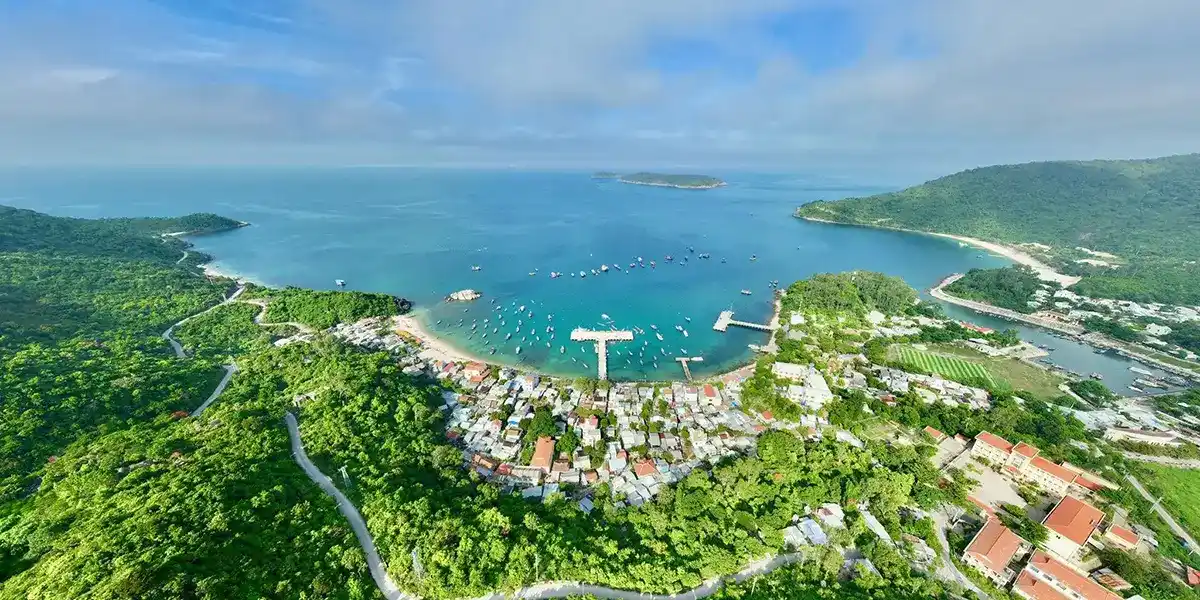
The Cham Islands archipelago encompasses a total landmass of approximately 15 square kilometers, masterfully distributed across eight islets forming a dynamic crescent shield. The largest and only permanently inhabited island is Hon Lao (Pear Island), featuring a rugged topography dominated by twin mountain peaks wrapped in lush, primary tropical rainforests. Radiating around Hon Lao are seven pristine satellite islets: Hon Dai, Hon Mo, Hon Kho Me, Hon Kho Con, Hon Tai, Hon Ong, and Hon La.
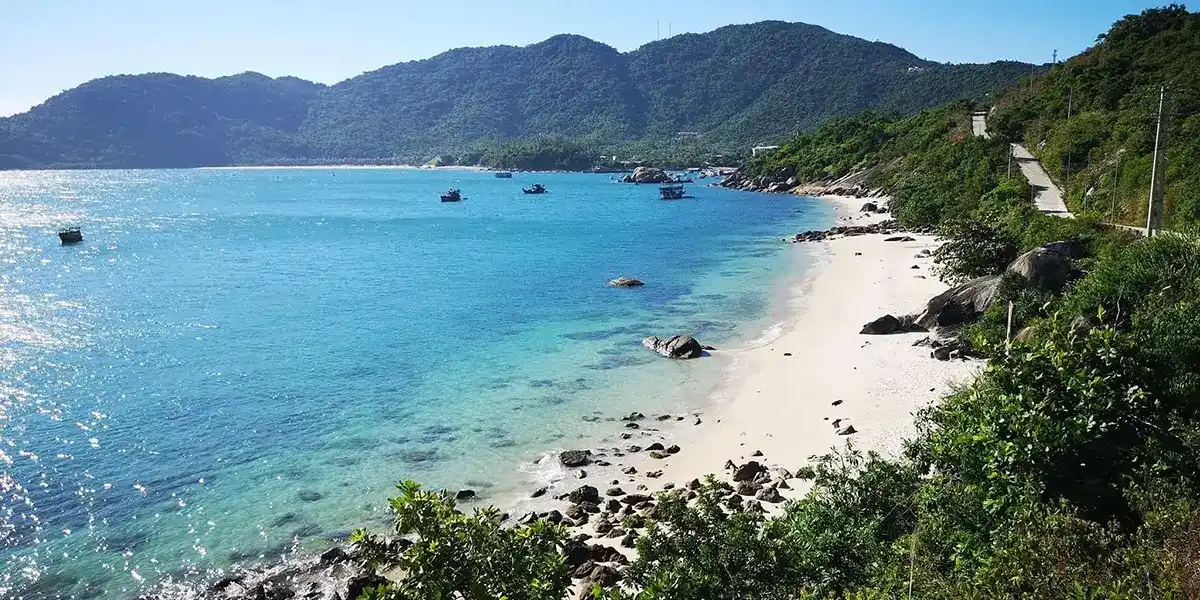
This distinct geological arrangement creates highly diverse micro-environments. While the outer rocky cliffs bear the brunt of ferocious winter monsoons, the inner, leeward shores of Hon Lao are blessed with incredibly calm, mirror-like bays lined with crescent-shaped beaches of powdery white sand. Beaches like Bai Ong, Bai Huong, Bai Lang, and Bai Xep have become legendary among travelers for their tranquil, crystal-clear waters where the seabed is clearly visible even at a depth of several meters.
An Underwater Rainforest: The Coral Reef Systems
What truly elevates Cham Islands to international environmental significance lies beneath its translucent waves. The archipelago acts as a vital marine nursery for the entire Central Vietnamese coast. Scientists have documented over 311 species of hard and soft corals, forming an incredibly dense, multi-colored underwater matrix that mimics a tropical rainforest.
These majestic coral gardens serve as the primary habitat, feeding ground, and shelter for hundreds of marine organisms, including 202 species of reef fish, 84 species of mollusks, 5 species of sea turtles, and numerous rare sea anemones and echinoderms. Swimming through these reefs at popular diving sites like Hon Tai or Bai Xep feels like entering a silent, weightless world of mesmerizing color, where vibrant parrotfish, camouflaged groupers, and translucent schools of anchovies glide seamlessly through swaying soft corals.
2. CULTURE AND ISLAND LIFE: THE INDOMITABLE SOUL OF THE MARITIME VILLAGES
The cultural tapestry of Cham Islands is etched with thousands of years of human maritime adaptation. This archipelago was an indispensable stopover for international trade ships traveling along the ancient Maritime Silk Road, long before it evolved into the serene fishing community we encounter today.
Ancient Footprints and Historic Monuments
Archeological excavations have revealed that Cham Islands was continuously occupied by prehistoric humans belonging to the Sa Huynh culture over 2,500 years ago. By the 4th century, the Champa Kingdom integrated these islands into their extensive maritime empire, utilizing the fresh water wells on Hon Lao to supply foreign trade ships navigating across the South China Sea.
Today, visitors can walk among living history by exploring centuries-old monuments that stand as silent guardians of island life:
- The Ancient Cham Well (Gieng Co Cham): Located in the heart of Xom Cam village, this square-based, brick-lined well is an engineering marvel constructed by the Cham people over 700 years ago. Despite being situated mere meters from the salty ocean shoreline, the well continuously yields cool, sweet, completely fresh water that never runs dry, even during the most severe droughts. Island folklore claims that drinking water from this mystical well can cure seasickness and bring good fortune in romance.
- Hai Tang Pagoda: Built in 1758 at the foot of Hon Lao's western mountain, this ancient Buddhist sanctuary features a classical architectural synthesis of the Le and Nguyen Dynasties. The pagoda serves as the spiritual anchor for the islanders, where fishermen gather to pray for calm seas, safe voyages, and bountiful catches before venturing out into the unpredictable open ocean.
- The Nest-Swiftlet Artisans Shrine (Mieu To Nghe Yen): Perched on a dramatic rocky cliff at Bai Huong, this sacred shrine was erected in the early 19th century to honor the pioneers of the high-stakes, hazardous swiftlet nest harvesting industry, a core historical pillar of the island economy.
The Daily Rhythm of the Fishing Communities
The human heartbeat of Cham Islands thrives within two main coastal settlements on Hon Lao: Bai Lang (the bustling administrative and commercial hub) and Bai Huong (a profoundly peaceful, traditional fishing village). The island population comprises roughly 3,000 residents who possess a deep, innate connection to the marine environment.
Life here unfolds in a mesmerizing, slow-motion rhythm dictated by the sun and tides. At the crack of dawn, the Tan Hiep pier erupts into vibrant activity as traditional wooden fishing boats and coracles (basket boats) return from overnight fishing trips, unloading shimmering baskets of squid, crabs, mackerels, and urchins. The islanders are fiercely communal and exceptionally warm; doors are rarely locked, and a passing stranger is routinely greeted with genuine smiles and invitations to share a cup of wild forest tea.
The Living Art of Field-Hammock Weaving: In Bai Huong village, a few elderly artisans still preserve the dying art of weaving traditional hammocks from the bark of the wild Ngo Dong tree (Chinese parasol tree). Harvesting the bark requires trekking deep into the rocky mountain forests, soaking it in mountain streams for months to extract pure fibers, and meticulously hand-weaving it over several weeks. These rare hammocks are exceptionally durable, naturally cooling, and are considered a priceless cultural heirloom of Cham Islands.
3. STRICT ANIMAL CONSERVATION: A PIONEERING MODEL OF REFUGE AND RECOVERY
What sets Cham Islands completely apart from almost every other tourist island in Vietnam is its unyielding commitment to environmental preservation and animal welfare. The island is celebrated globally for its pioneering conservation models that balance tourism revenue with ecological survival.
The Battle Against Plastic: The Zero-Plastic Island Icon
Since 2009, long before global anti-plastic movements became mainstream, the local government and residents of Cham Islands enacted a strict ban on the importation and usage of single-use plastic bags and straws. Visitors arriving at the pier are thoroughly checked, and any plastic bags are replaced with eco-friendly bio-degradable paper bags.
This radical community-led initiative has radically minimized plastic pollution in the surrounding marine environments, creating an exceptionally clean habitat that allows fragile marine animals and birds to thrive without the threat of consuming toxic plastic debris.
Preserving the Mountain Lords: The Red-Clawed Land Crab (Cua Da)
The Cua Da (Gecarcoidea lalandii) is a large, colorful land crab that lives deep in the damp mountain caves of Hon Lao, feeding exclusively on fallen forest leaves and wild roots. Its meat is incredibly sweet, fragrant, and heavily sought after by gourmands, which historically led to severe overhunting that pushed the species to the brink of extinction.
To combat this, Cham Islands implemented an extraordinary, community-managed conservation program. Hunting land crabs is strictly banned during their peak breeding season (from August to January). Furthermore, only crabs with a shell width exceeding 7 centimeters are permitted to be caught. Every legally harvested crab must be brought to the Conservation Hub to be inspected and fitted with a special QR-coded biological stamp on its claw before it can be sold or served in restaurants. This visionary model has successfully recovered the land crab population while providing sustainable, highly regulated income for local foragers.
Protecting the White-Nest Swiftlets (Chim Yen)
The sheer, inaccessible sea cliffs of Hon Tai, Hon Kho, and Hon Lao are home to thousands of White-nest Swiftlets (Aerodramus fuciphagus). These remarkable birds build their nests using their own solidified saliva, creating a highly prized luxury food commodity known as "Edible Bird's Nest" (Yen Sao).
The swiftlet population is fiercely guarded by dedicated ranger teams who live in remote outposts on the rocky islets year-round. These guards prevent illegal poaching and closely monitor the birds' breeding cycles. Harvesting is restricted to just twice a year—strictly after the young fledglings have fully matured and abandoned the nests—ensuring the wild avian population continues to grow and multiply safely.
4. ECO-TOURISM SERVICES: CURATING UNFORGETTABLE ISLAND ADVENTURES
Tourism on Cham Islands is intentionally structured to be low-impact, highly educational, and deeply immersed in the local environment. Here are the premier experiences that showcase the magic of the archipelago:
| Eco-Tourism Service | Activity Details & Conservation Guidelines | Recommended Logistics & Spots |
|---|---|---|
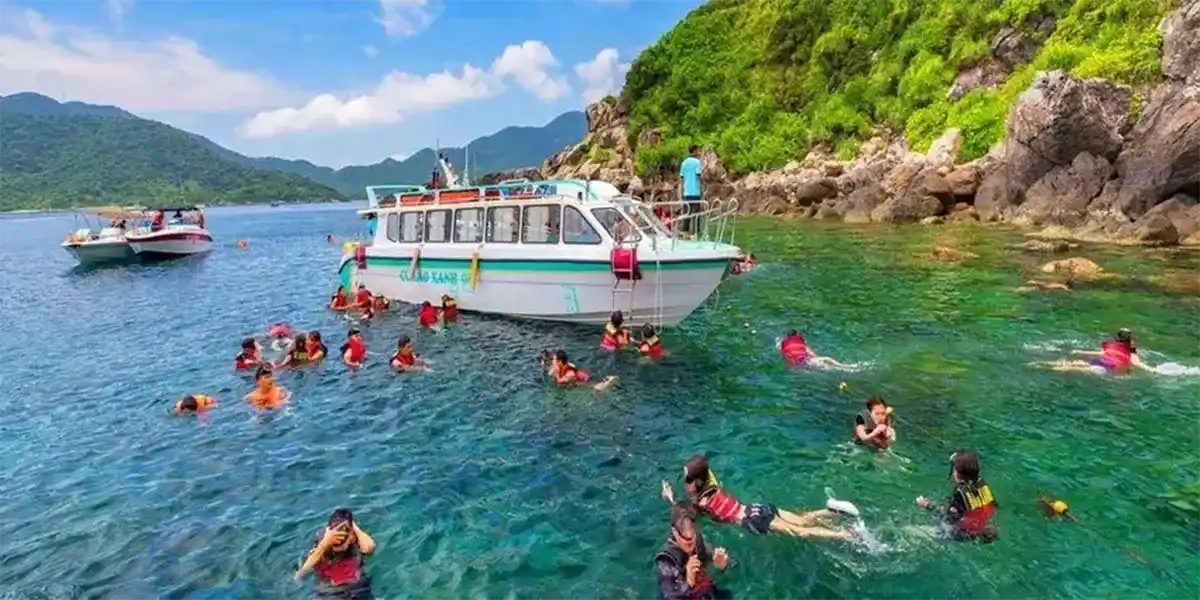
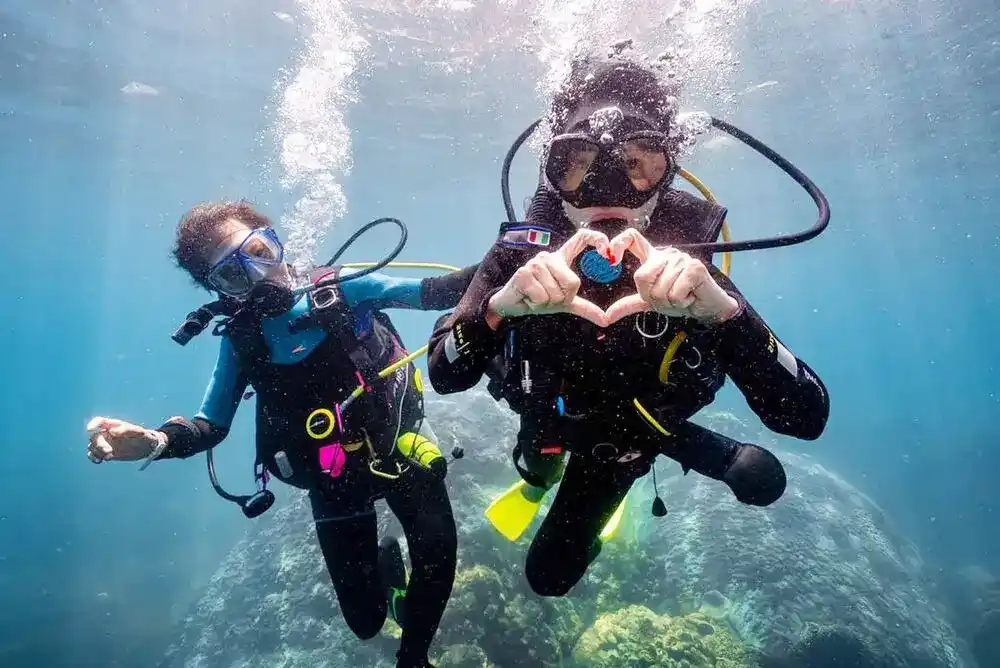
| Snorkeling & Marine Diving | Take a traditional wooden boat to Hon Tai or Bai Xep. Armed with masks and life jackets, you float over massive coral reefs. Rule: Touching or stepping on corals is strictly prohibited to prevent structural breakage. | • Hon Tai Reef (Best for vibrant soft corals) • Bai Xep (Shallow waters, ideal for beginners) |
| Marine Seawalker (Đi bộ dưới biển) | An innovative, safe experience where you wear a specialized oxygen helmet and walk directly on the ocean floor at a depth of 5 meters, feeding exotic reef fish and observing coral ecosystems up close. | • Hon Nhon Eco-Zone (Managed by certified marine specialists) |
| Bai Huong Fishing Village Homestay | Escape commercial hotels and stay directly in the modest wooden homes of local fishermen. Learn to cast traditional nets, cook authentic island meals, and listen to fascinating seafaring folklore. | • Bai Huong Eco-Homestay Cluster (Directly benefits local fishing families) |
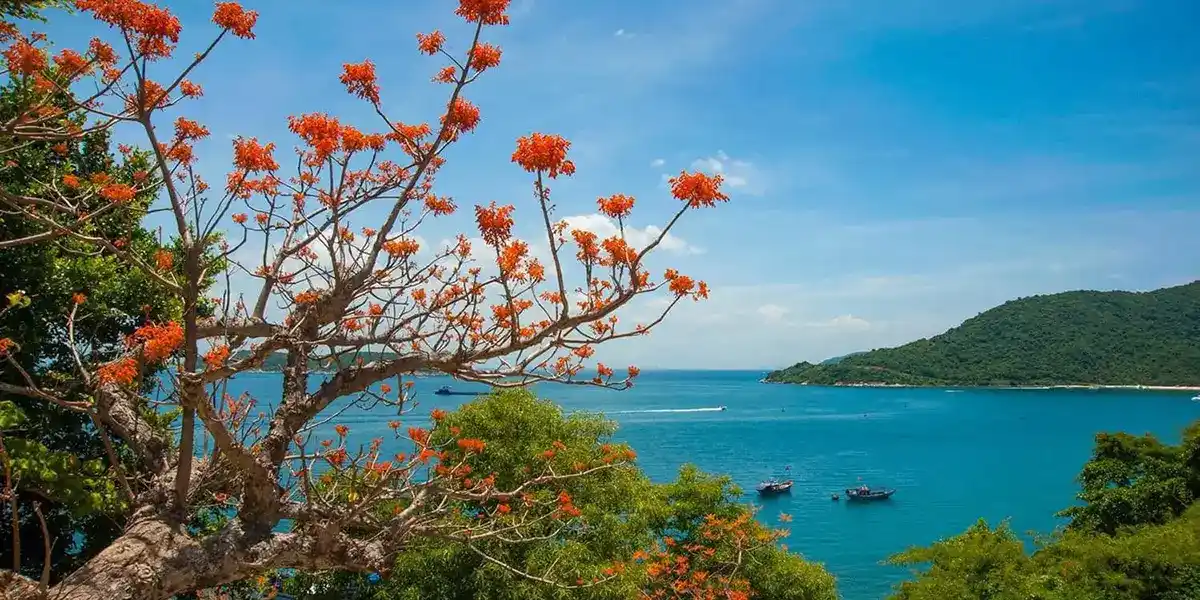
| Mountain Trekking & Coastal Biking | Rent a bicycle or trek along the narrow concrete road that snakes around the spine of Hon Lao. Enjoy dramatic vistas of the open ocean and witness wild fields of blooming red Ngo Dong flowers in summer. | • Eo Gio (Wind Cape - Spectacular sunrise spot) • Rung Ngo Dong (Wild parasol tree forest) |
Indulging in Sustainable Island Gastronomy
Dining on Cham Islands is a celebration of pristine natural flavors. Because the marine reserve is strictly regulated, the seafood here is exceptionally high quality. Beyond the famous QR-stamped Land Crabs, visitors must savor Vú Nàng Scallops (cone-shaped limpets grilled with scallion oil and peanuts), sweet stir-fried rock squids, and sea urchins baked with eggs.
Another culinary masterpiece unique to the island is Lá Rừng Tea (Wild Forest Tea). This therapeutic beverage is brewed from a secret blend of over 30 varieties of wild medicinal leaves, roots, and herbs gathered by islanders deep within the mountain rainforests. The tea possesses a distinctly earthy, slightly bitter yet sweet aftertaste, renowned for its ability to detoxify the body, soothe digestion, and promote deep, restful sleep.
5. COMPLETE TRAVEL LOGISTICS: FROM DA NANG TO CHAM ISLANDS
The journey to Cham Islands requires a two-stage transit: a land transfer to the harbor followed by a maritime voyage across the ocean. To guarantee a seamless and highly enjoyable expedition, understanding the logistics is vital.
Stage 1: Overland Transfer from Da Nang to Cua Dai Pier
The starting point for all maritime vessels heading to Cham Islands is the Cua Dai Tourist Pier, located in Hoi An, approximately 35 kilometers south of Da Nang. The drive along the smooth coastal highway takes roughly 45 to 50 minutes. For travelers seeking ultimate punctuality, safety, and modern comfort, pre-booking a private car with Safe Car is highly recommended. It ensures you arrive at the pier fully relaxed and on schedule to catch the morning speedboats, completely avoiding the stress of unreliable taxis or exposed motorbikes during sudden downpours.
Stage 2: Maritime Transit across the Ocean
From Cua Dai Pier, travelers have two choices to cross the ocean channel to Hon Lao:
- High-Speed Canoe (Speedboat): The most popular and thrilling option. It takes a mere 20 minutes to cut through the waves and reach the island. Speedboats operate multiple daily departures, primarily between 8:30 AM and 9:15 AM, returning to the mainland between 1:00 PM and 2:00 PM. This is ideal for day-trippers.
- The Wooden Cargo Boat (Chợ Tàu): The traditional boat utilized by locals to transport supplies. It departs Cua Dai Pier daily at 8:00 AM and takes a slow, scenic 1.5 to 2 hours. While slow and lacking air conditioning, it offers a deeply authentic, nostalgic seafaring experience at a fraction of the cost, perfect for slow-travel backpackers planning to stay overnight.
🚘 BOOK ALL-INCLUSIVE DA NANG TO CUA DAI PIER PRIVATE CAR – SAFE CAR DA NANG
Providing an immaculate, air-conditioned fleet of professional 4-seater, 7-seater, and 16-seater private vehicles (latest 2025 - 2026 models) to smoothly transport you from Da Nang directly to Cua Dai Pier. Arrive safely and comfortably on time to catch your Cham Islands speedboat! Fixed transparent pricing includes all tolls with no hidden fees.
Contact our 24/7 Hotline via Zalo / WhatsApp to secure a special 10% discount on your round-trip transfer!