
My Son Sanctuary
MY SON SANCTUARY – THE MYSTICAL VALLEY OF THE ANCIENT CHAMPA KINGDOM
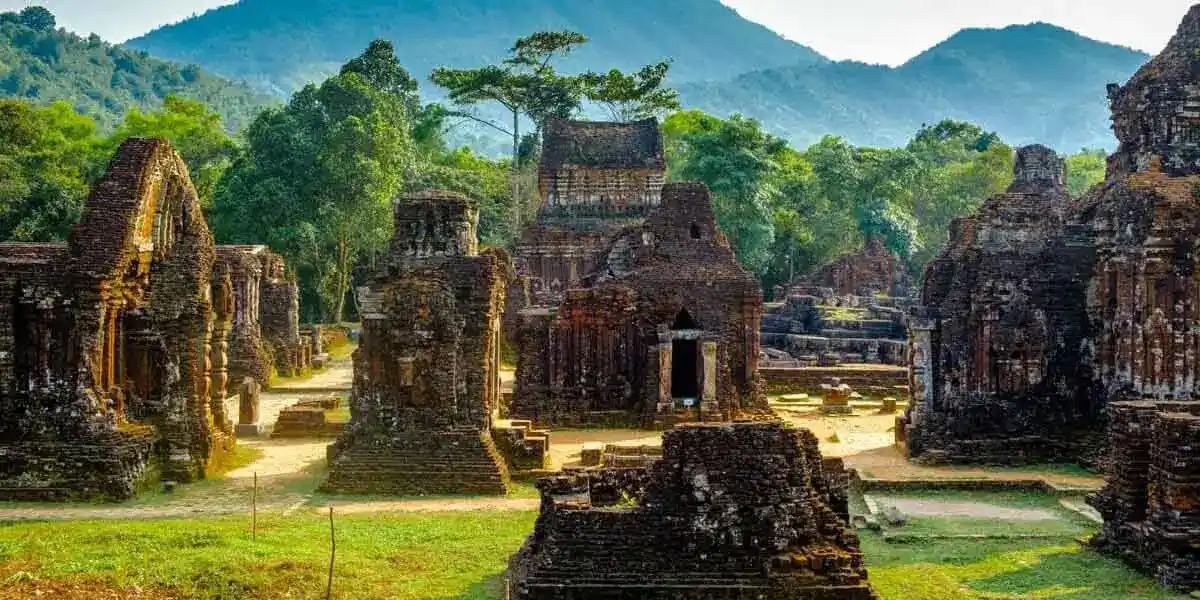
Tucked away in a narrow valley surrounded by an imposing ring of hills, My Son Sanctuary is not just a UNESCO World Heritage site—it stands as a profound testament to the brilliant and sophisticated Champa civilization that once flourished along coastal Vietnam. For international travelers journeying through Central Vietnam, My Son offers an unforgettable experience: a blend of solemn tranquility, archaeological marvel, and deep respect for the architectural mastery of ancient builders. To guarantee you have a seamless and enriching journey, SafeCarDaNang presents the ultimate travel guide to My Son Sanctuary, covering its rich history, artistic architecture, and practical transport tips.
1. CULTURAL HISTORY: THE CRADLE OF THE SACRED
The Genesis of the Champa Kingdom
To truly appreciate the spiritual weight of My Son, one must travel back to the 4th century AD. The Champa Kingdom was then a powerful coastal empire heavily influenced by Hindu beliefs, cultural traditions, and trade networks originating from India.
My Son was selected as the religious and spiritual epicenter of the Champa royal elite. While the nearby citadel of Tra Kieu (Simhapura) served as the political and administrative capital where kings ruled, My Son (Srisanabhadresvara) was the sacred domain. Here, Champa kings would perform royal ceremonies, offer lavish sacrifices upon their coronation, and seek spiritual blessings from the gods to legitimize their divine rule (the concept of the God-King).
A Millennium of Evolution
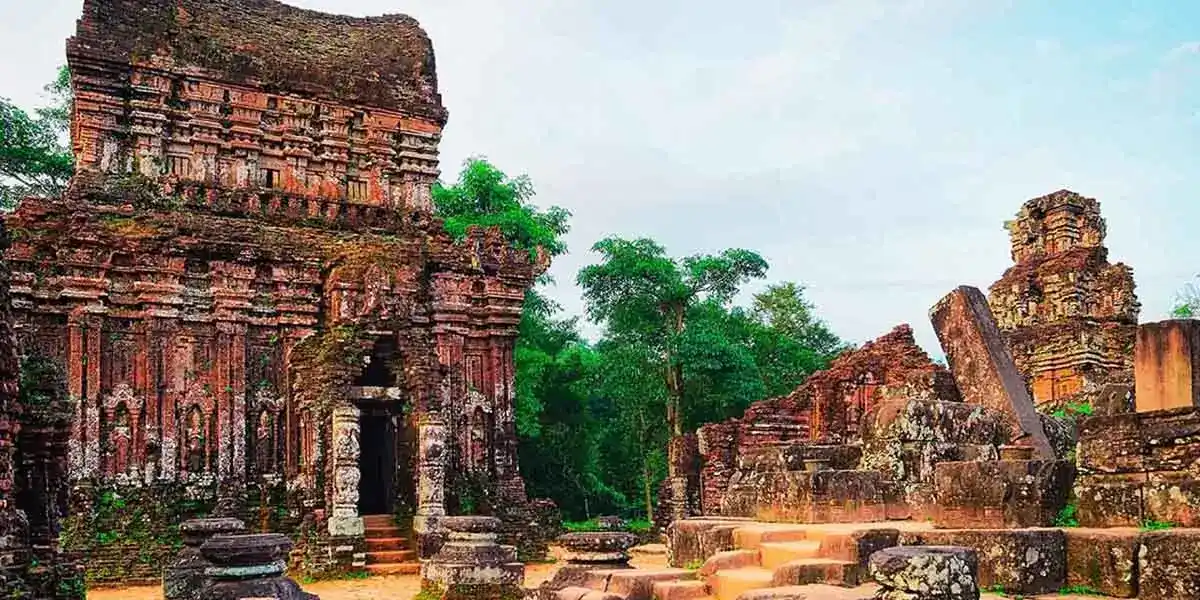
My Son Sanctuary was not erected all at once; it evolved continuously as a massive complex of brick and stone structures built, expanded, and restored across ten centuries (from the 4th to the 14th century).
- 4th Century (The Reign of Bhadravarman): King Bhadravarman erected the very first temple out of wood to honor the god Siva-Bhadresvara. This marked the birth of the sanctuary. Though this wooden temple was later destroyed by a massive fire, it solidified the valley's sacred status.
- 7th Century (The Reign of Sambhuvarman): King Sambhuvarman rebuilt the sanctuary using a far more durable material: fired clay bricks. The Sambhuresvara temple was born, pioneering the golden era of brick architecture in My Son.
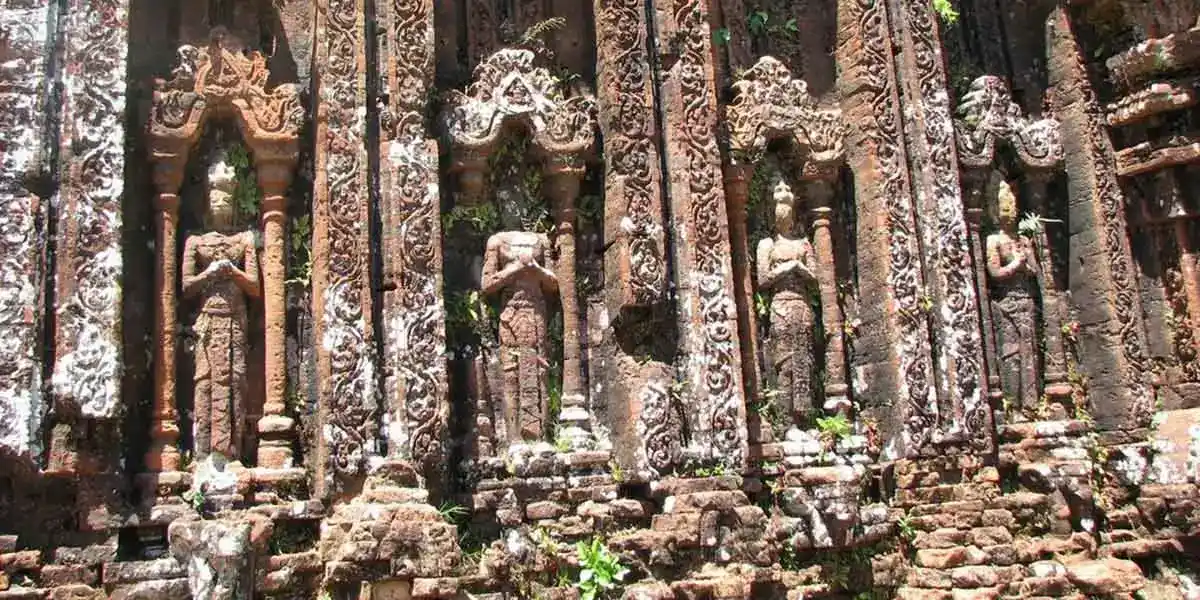
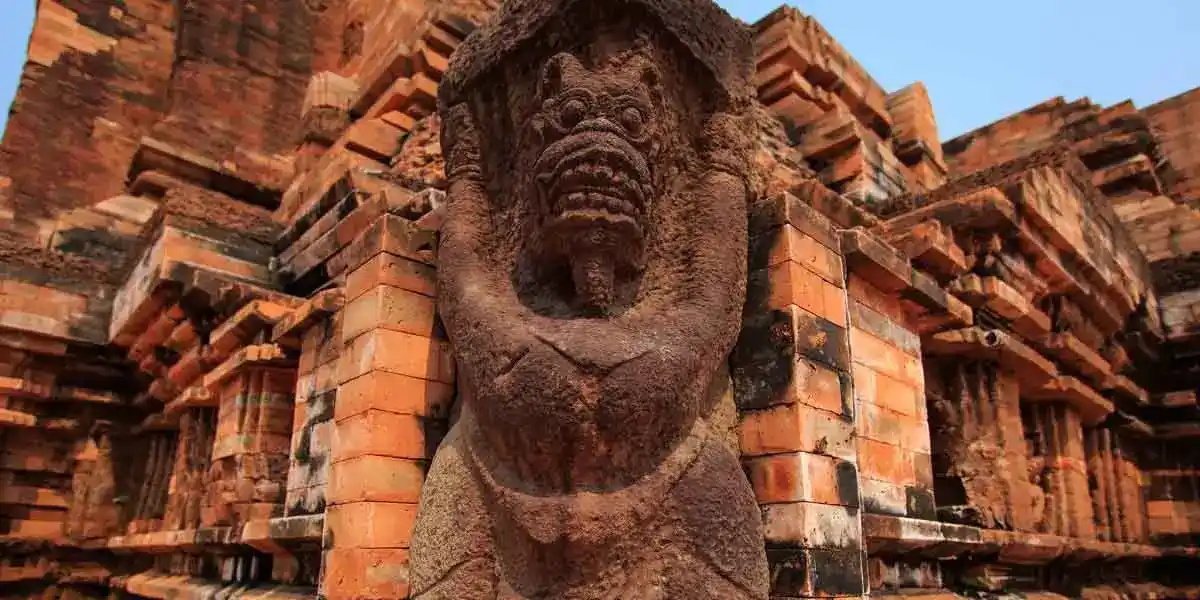
- 8th to 10th Century: This period represents the absolute golden age of Champa art. Successive kings ordered the construction of massive new temple clusters featuring incredibly intricate carvings, reflecting the immense wealth and artistic maturity of the empire.
- 11th to 14th Century: Due to continuous wars with neighboring kingdoms, the political center of Champa gradually shifted southward. However, My Son maintained its status as the supreme holy ground, and kings continued to make regular pilgrimages here until the civilization's eventual decline.
Centuries of Oblivion and Re-discovery
After the 14th century, as the Champa Kingdom waned and integrated into the historical trajectory of Dai Viet (modern-day Vietnam), My Son fell into a long sleep lasting hundreds of years deep inside dense jungle foliage. Nature took over—massive tree roots wrapped around the ancient brick walls, turning the sanctuary into a beautifully haunting "lost world."
It wasn't until 1898 that a French scholar named M.C. Paris accidentally stumbled upon the ruins during a cartographic expedition. Recognizing its historical value, archaeologists from the École Française d'Extrême-Orient (EFEO) immediately cleared the jungle, mapped out the site, and classified the remaining towers into letters (A, B, C, D, E, F, G, H), introducing My Son to global archaeological fame.
2. ARCHITECTURAL MARVELS: UNRESOLVED MYSTERIES
The Mortarless Brick Mystery
One of the most profound questions that continues to baffle world-class scientists and structural engineers at My Son is: How did the ancient Cham people bond these millions of bricks together so tightly that no mortar joints are visible to the naked eye?
The walls of My Son have stood tall for over a thousand years, weathering heavy tropical storms, wartime bombardments, and high humidity without accumulating thick moss between the brick gaps. Today, two major scientific theories stand out:
- Organic Resin Adhesive: Many researchers believe the Cham used a natural adhesive derived from indigenous tree sap (such as the Dipterocarp tree) mixed with finely ground brick powder. Bricks were meticulously rubbed against each other while the glue was wet to form a flawless bond.
- Whole-Tower Firing Kills: This alternative theory suggests the Cham built the entire structure out of raw, unfired clay bricks (or semi-fired bricks) and carved the intricate details directly onto the walls. Afterward, they encased the entire tower in a massive bonfire kiln, baking the whole structure into a singular, solid block of terra-cotta.
3. GEOGRAPHY & GEOMANCY: A SACRED SACRAMENT
My Son Sanctuary is perfectly cradled within an amphitheater-like valley measuring about 2 kilometers in diameter, surrounded by an unbroken chain of dramatic peaks in Duy Xuyen District, Quang Nam Province. This geography naturally isolates the site from the outside world, creating a palpable aura of solemn spirituality the moment you step foot inside.
The southern edge of the valley is dominated by the highest peak in the area—Mount Cat's Tooth (Hon Quap), which pierces the sky like a giant canine tooth. In Champa cosmology, this mountain represented the divine dwelling of Lord Shiva, the protector of the empire. A sacred stream originates from the foot of this holy mountain, flowing right through the heart of the valley to serve as a local "Ganges River" for ritual cleansing and holy purifications.
4. OUTSTANDING UNIVERSAL VALUE
In December 1999, the UNESCO World Heritage Committee officially inscribed My Son Sanctuary onto its prestigious list, citing two core criteria:
- Criterion (ii): My Son is an exceptional example of cultural interchange, where Hindu architecture from the Indian subcontinent was brilliantly adapted, integrated, and localized into Southeast Asian culture.
- Criterion (iii): My Son provides an exceptional and unique material reflection of the spiritual and political evolution of the Champa civilization over a millennium.
5. HOW TO TRAVEL TO MY SON SANCTUARY
My Son Sanctuary is located roughly 45km from downtown Da Nang and 40km from Hoi An Ancient Town. Travel time averages between 60 to 75 minutes each way depending on your starting location.
| Transport Options | Pros | Best Suited For |
|---|---|---|
| Motorbike | Budget-friendly, total flexibility to stop and sightsee along rural roads. | Solo travelers or adventurous backpackers comfortable with local traffic. |
| Group Tour Bus | Low cost per person, includes a shared tour guide for large groups. | Solo budget travelers who don't mind strict, unalterable timelines. |
| Safe Car Private Transfer | Door-to-door pickup, modern air-conditioned vehicles, professional English-friendly local drivers, 100% flexible schedule, and ultimate safety. | Families with children/seniors, small groups, couples, or anyone seeking a comfortable, premium experience. |
Insider Tip from Safe Car: The roads leading into the My Son valley can be quite winding and secluded. Walking through the open-air archaeological site under the tropical sun can be physically draining. Booking a roundtrip private car service with Safe Car ensures you can relax in a cool, air-conditioned vehicle immediately after your tour, making your holiday stress-free.
6. ENTRANCE FEES & SERVICE HOURS (UPDATED 2026)
Here is the official admission pricing and operating schedule for My Son Sanctuary, updated for the 2026 travel season:
| Visitor Category | Ticket Price (All-Inclusive) | What's Included |
|---|---|---|
| International Visitors | 150,000 VND / person | Full park admission + Round-trip electric shuttle ride from the main gate to the ruins (2km) + Access to live Champa Apsara traditional dance performances. |
| Domestic Visitors | 100,000 VND / person |
📌 Crucial Visitor Information:
• Opening Hours: 06:00 AM – 05:00 PM every single day of the week (including holidays).
• Children under 1 meter tall: Free of charge.
• Champa Dance Performance Times: Held daily at the performance house at 09:15 AM, 10:45 AM, 02:00 PM, and 03:30 PM. We highly recommend arriving 10 minutes early to secure a prime front-row seat.
7. THE BEST TIME TO VISIT
The weather in the My Son valley mirrors the tropical climate of Central Vietnam. Choosing your visiting hours wisely will dramatically improve your experience:
- The Dry Season (April – August): Clear blue skies provide the perfect backdrop, making the reddish bricks look incredibly vibrant in photos. However, midday temperatures can be scorching. We suggest planning your trip for early morning or late afternoon.
- The Mystic Mossy Season (September – December): Occasional rains dress the valley in misty, atmospheric vibes. The ancient temples become covered in vibrant green moss, offering a dramatically historic and solitary look favored by professional photographers.
- The Golden Hours: Early morning from 06:30 AM – 08:30 AM (beat the tour-bus crowds and enjoy the peaceful sunrise) or late afternoon from 02:30 PM – 04:30 PM (soft golden sunlight and romantic sunsets over Mount Cat's Tooth).
8. VITAL TRAVEL ETIQUETTE & TIPS
- Dress Code: As My Son is an active sacred spiritual site, visitors must dress respectfully. Please wear clothing that covers both your shoulders and knees. Avoid revealing tank tops or short skirts.
- Footwear: Wear comfortable walking shoes, sneakers, or flat sandals. You will be walking quite a bit on packed dirt paths and grassy fields.
- Preserve the Heritage: Absolutely do not climb on the structures, lean against the old walls, or touch the intricate stone reliefs. The oils on human hands can accelerate the erosion of these fragile ancient brickworks.
- Sun & Hydration: Bring an umbrella, a wide-brimmed hat, high-SPF sunscreen, and a bottle of water. Shade can be sparse inside the main archaeological zones.
- Local Culinary Delights: After completing your trek, satisfy your appetite with iconic Quang Nam delicacies. Try **Mi Quang** (savory turmeric noodles with herbs) or **Be Thui Cau Mong** (delicately smoked veal wrapped in rice paper). Our Safe Car drivers are happy to drop you off at authentic local eateries beloved by residents!
🚘 BOOK YOUR PRIVATE DISCOVERY TOUR WITH SAFE CAR DA NANG
Enjoy a premium, private journey with our modern fleet of 4, 7, and 16-seater vehicles. Clean, completely odorless cars paired with courteous, professional local drivers who know the region inside out.
Contact us via Hotline or WhatsApp today to secure a 10% early booking discount for your upcoming adventure!